
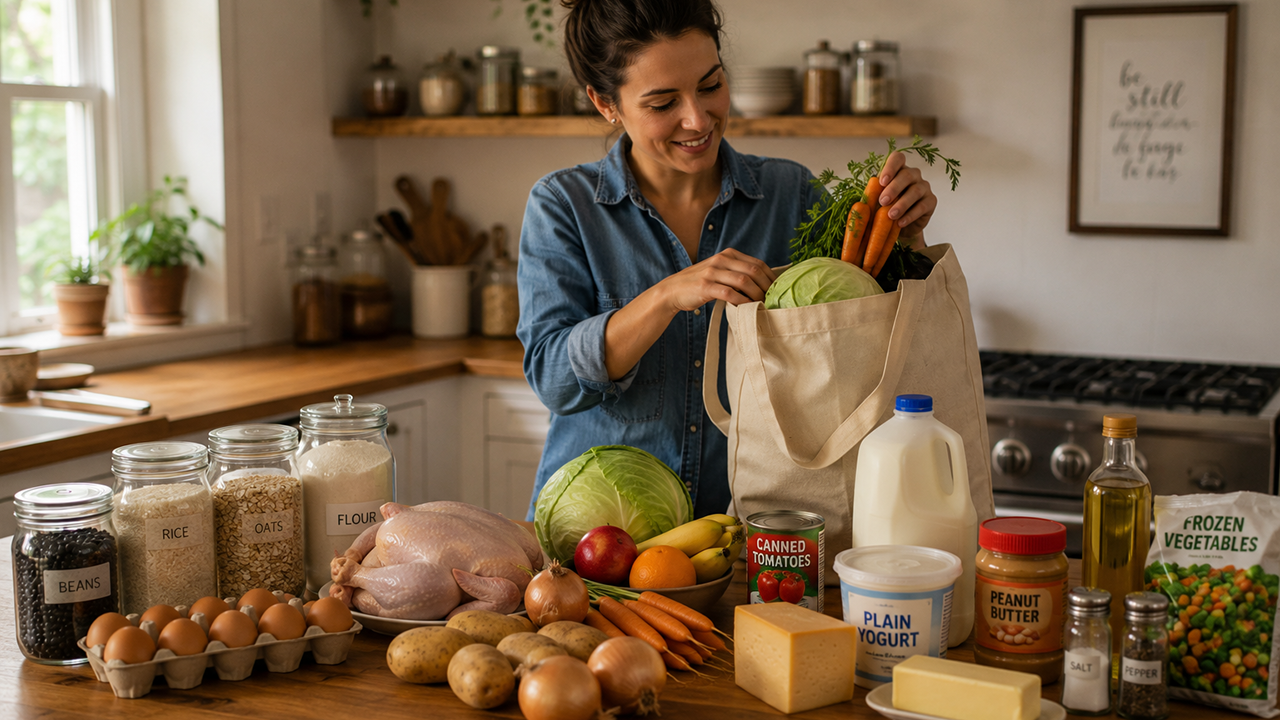
This video popped up on my feed this morning and what a blessing! Living so far from a large grocery store and no take out, a person learns quickly to cook for themselves or pay a high price. This video illustrates plainly what it really costs us to buy premade foods. That part is fun and illuminating. But this practical guide to what to buy is revolutionary and so very simple at the same time. Brenda Carver grew up in a small town as well. She watched her grandma and mother live the same principles we strive for here in the valley. She just gets it.
Below is a summary of this video based on its central ideas and publicly available descriptions. The original concepts, examples, and presentation belong to Brenda Carver on her YouTube channel Tried and True. If you enjoy practical homemaking, scratch cooking, and budget-friendly meal planning, I highly recommend watching the video to get her full explanations and demonstrations.
For your notes, go to 11:13 to get the full list of staples. All of you probably knew number 19, but I learned something today that really changed how I will be shopping from now on. And don’t laugh but it never really occurred to me that I can use canned tomatoes for salsa. I currently have seven tomatoes that I purchased from a store two hours away, rotting on my counter. I really was going to make salsa, then life happened and here we are.
Summary
Brenda Carver’s main message is that most families don’t need hundreds of different grocery items to eat well. Instead, by keeping approximately twenty versatile staples on hand, you can prepare dozens of meals while spending less, wasting less food, and reducing decision fatigue.
Her philosophy isn’t about eating the exact same meal every day. Rather, it’s about selecting foods that work together in many different combinations and purchasing specialty ingredients only when a specific recipe truly requires them.
The Core Principles
1. Buy ingredients, not meals
Instead of shopping recipe-by-recipe, build your pantry around foods that can be used repeatedly throughout the week.
This creates flexibility because one ingredient can appear in breakfast, lunch, dinner, snacks, and desserts.
2. Choose foods with multiple uses
Every grocery item should earn its place by serving several purposes.
For example:
- Eggs become breakfast, baking ingredients, sandwiches, casseroles, and quick dinners.
- Rice becomes side dishes, stir fry, burrito bowls, soups, and casseroles.
- Potatoes become baked potatoes, mashed potatoes, soups, breakfast hash, and roasted sides.
3. Shop seasonally
Rather than insisting on the same produce year-round, buy what is:
- in season
- abundant
- inexpensive
Seasonal produce generally tastes better and costs less.
4. Reduce food waste
Buying fewer unique ingredients means you actually use everything before it spoils.
Instead of half-used jars and forgotten vegetables in the refrigerator, the same ingredients appear in several meals.
5. Build meals around inexpensive staples
Rather than centering every meal around expensive meat or processed convenience foods, use economical staples and stretch proteins further.
Examples include:
- beans
- rice
- potatoes
- oats
- eggs
- seasonal vegetables
These provide nutrition while lowering grocery costs.
Typical Grocery Categories Brenda Recommends
While the exact list is her own, it centers around categories like:
Protein
- Eggs
- Whole chicken
- Beans
Dairy
- Plain Milk
- Block of Cheese
- Plain Yogurt
- Butter
Produce
- Potatoes
- Cabbage
- Seasonal Fruits
- Whole Carrots
- Frozen Vegitables
Pantry Staples
- Rice
- Peanut Butter
- Oats
- Flour
- Cooking oil
- Basic seasonings
These foods can be combined into dozens of different meals.
The Meal Strategy
One of the biggest takeaways is to think in terms of ingredient families rather than recipes.
For example, a whole chicken might become:
- Roast chicken
- Chicken soup
- Chicken salad
- Chicken tacos
- Chicken and rice casserole
- Stock made from the bones
Likewise, cooked rice can become:
- Fried rice
- Burrito bowls
- Side dishes
- Soups
- Stuffed peppers
The goal is to maximize every purchase.
Benefits Brenda Highlights
Following this approach can help:
- Lower weekly grocery bills.
- Reduce impulse purchases.
- Decrease food waste.
- Simplify meal planning.
- Keep a more organized pantry.
- Reduce trips to the grocery store.
- Make cooking from scratch more practical.
My Biggest Takeaways
What stands out most about Brenda Carver’s approach is that it focuses on systems rather than recipes. Instead of constantly asking, “What should I make tonight?” she encourages building a pantry where many meals are always possible because the ingredients naturally work together.
Her philosophy also aligns well with preparedness: a pantry stocked with versatile staples is not only economical but also more resilient during busy weeks or supply disruptions.
Credit: This summary is based on the ideas presented by Brenda Carver in her video “You Only Need These 20 Groceries Every Week (Stop Buying the Rest)” on her YouTube channel Tried and True. The concepts, examples, and original presentation are entirely her work. If you found this summary useful, I encourage watching the full video to hear her explanations and see how she applies these principles in her own kitchen.